The expansion of the school campus in Paal adds new classrooms for both kindergarten and primary education. The design retains the existing kindergarten building and introduces a new spatial structure of indoor and outdoor areas. The goal is to create a safe and accessible learning environment that supports the development of every child. The classroom serves as the core unit: calm, functional, and tailored to the daily needs of both pupils and teachers.
Architecture plays a supporting role. There is no decorative ambition—function and use define the space. The building provides a framework for education, not a visual statement.
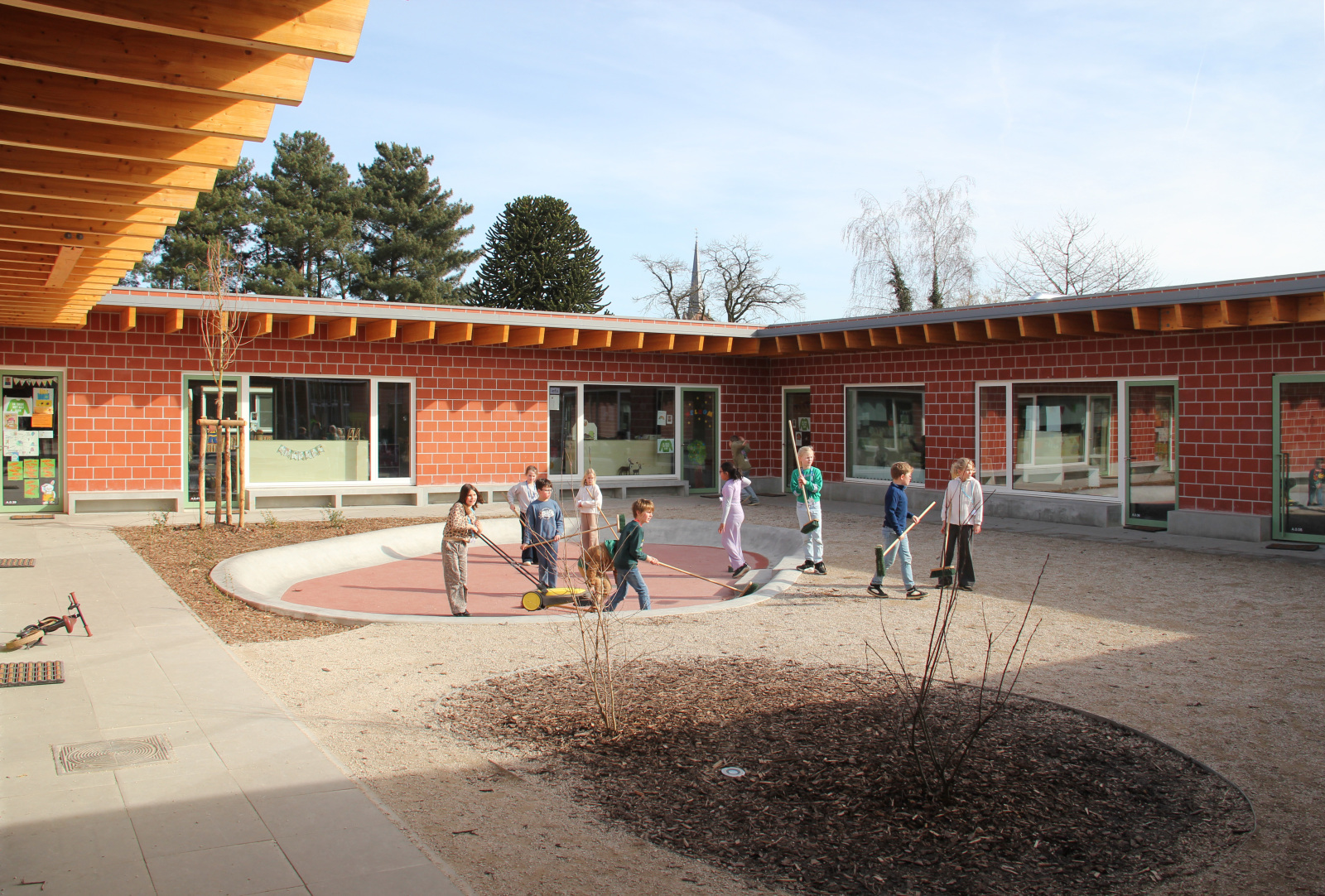
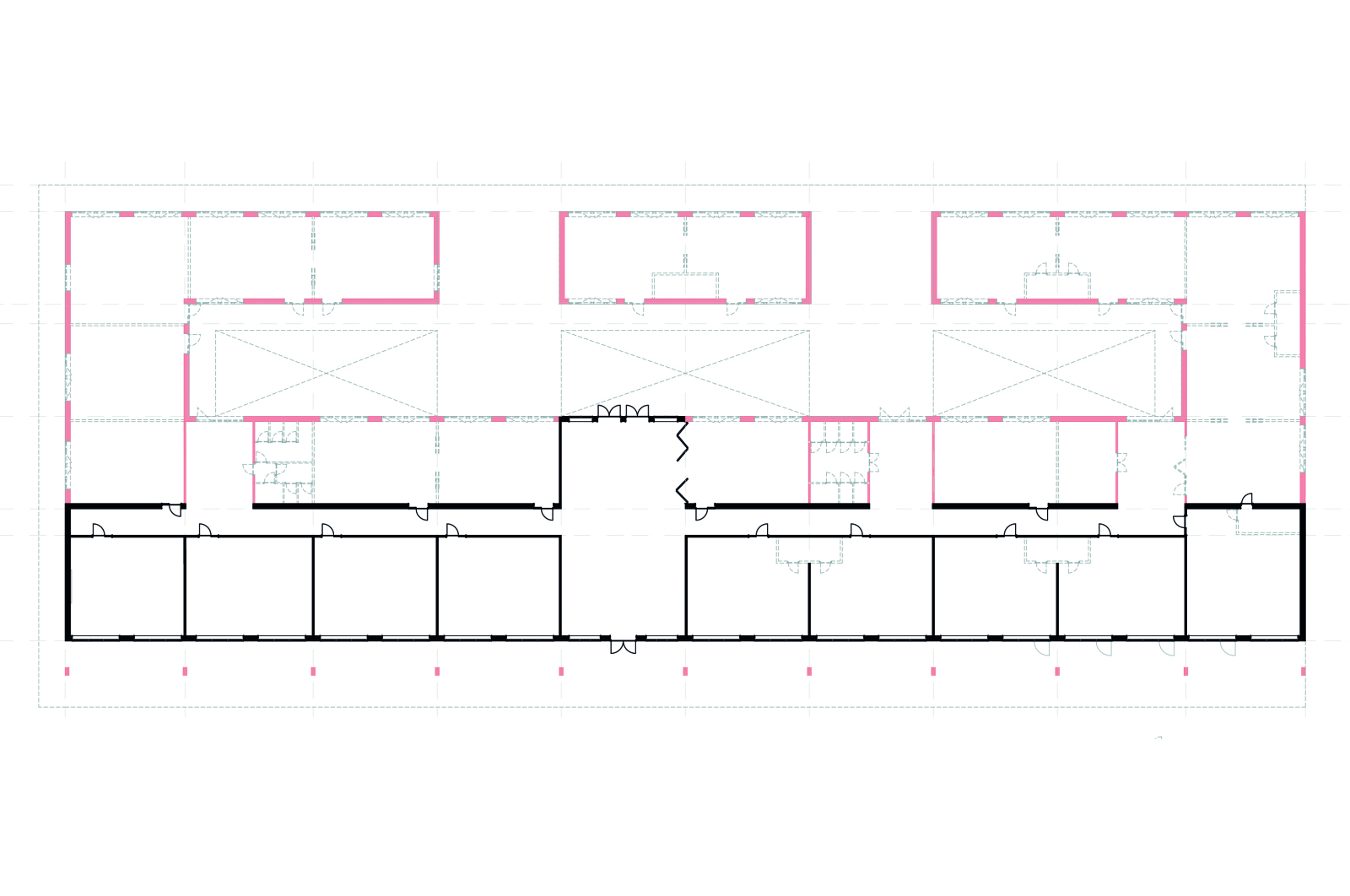
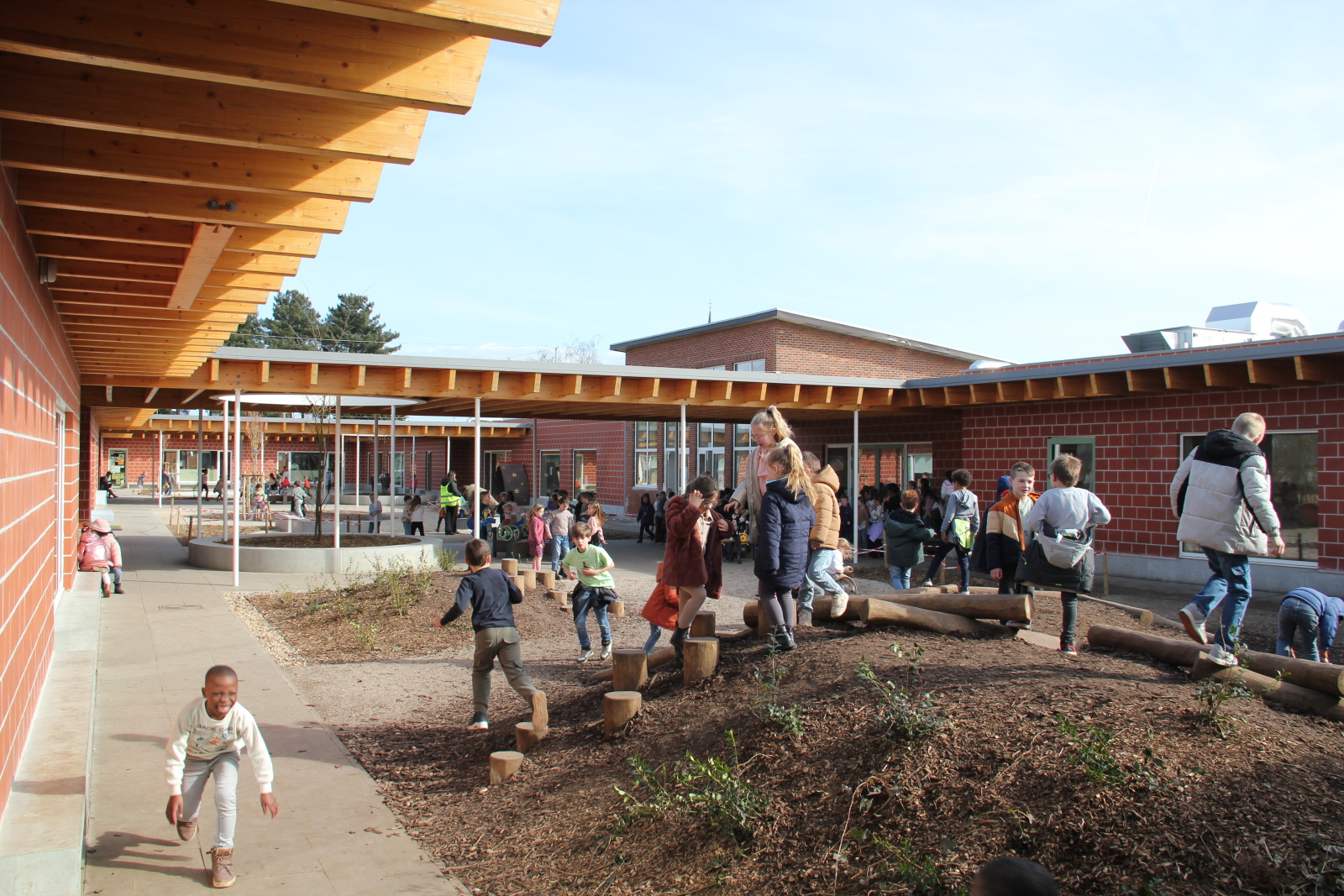
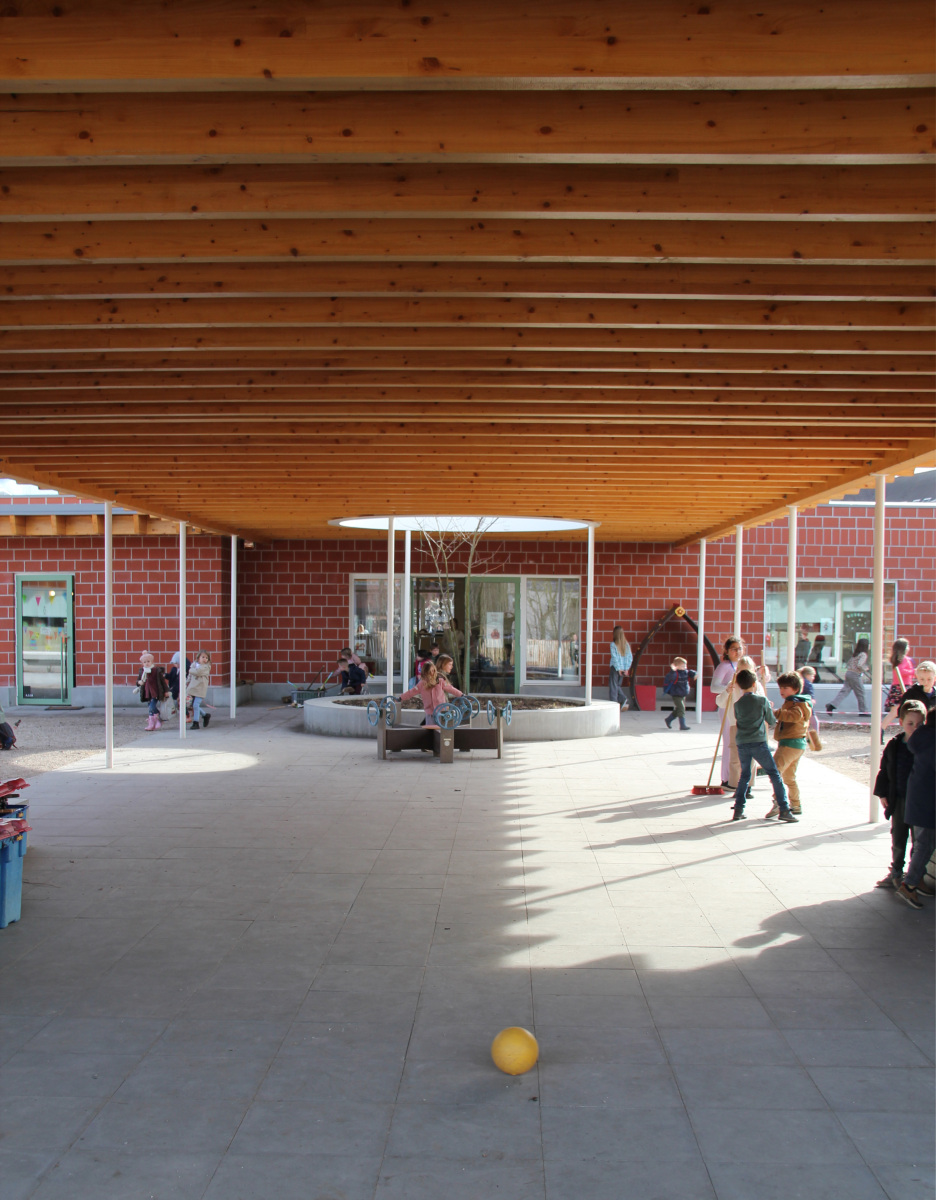
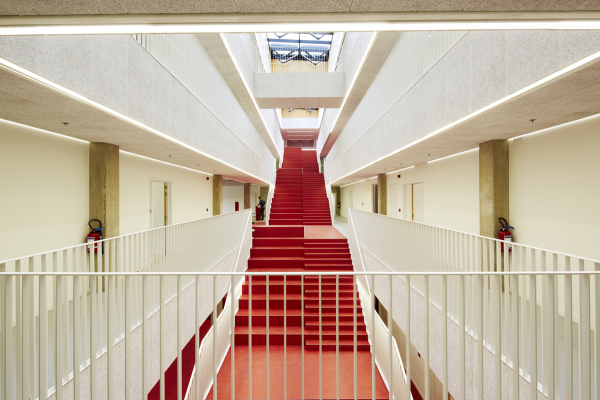
The design avoids the traditional corridor-with-classrooms model. Instead, it offers a structure based on short circulation paths, clear spatial connections, and visual coherence. The new classrooms are arranged around a central, partly covered courtyard. Transitions between inside and outside are deliberately articulated: canopies offer shelter, while intermediate spaces encourage informal interaction.
Kindergarten classes are directly connected to their own outdoor areas, providing quiet zones tailored to age and activity. The architecture is low-threshold, focused on comfort, safety, and clarity.
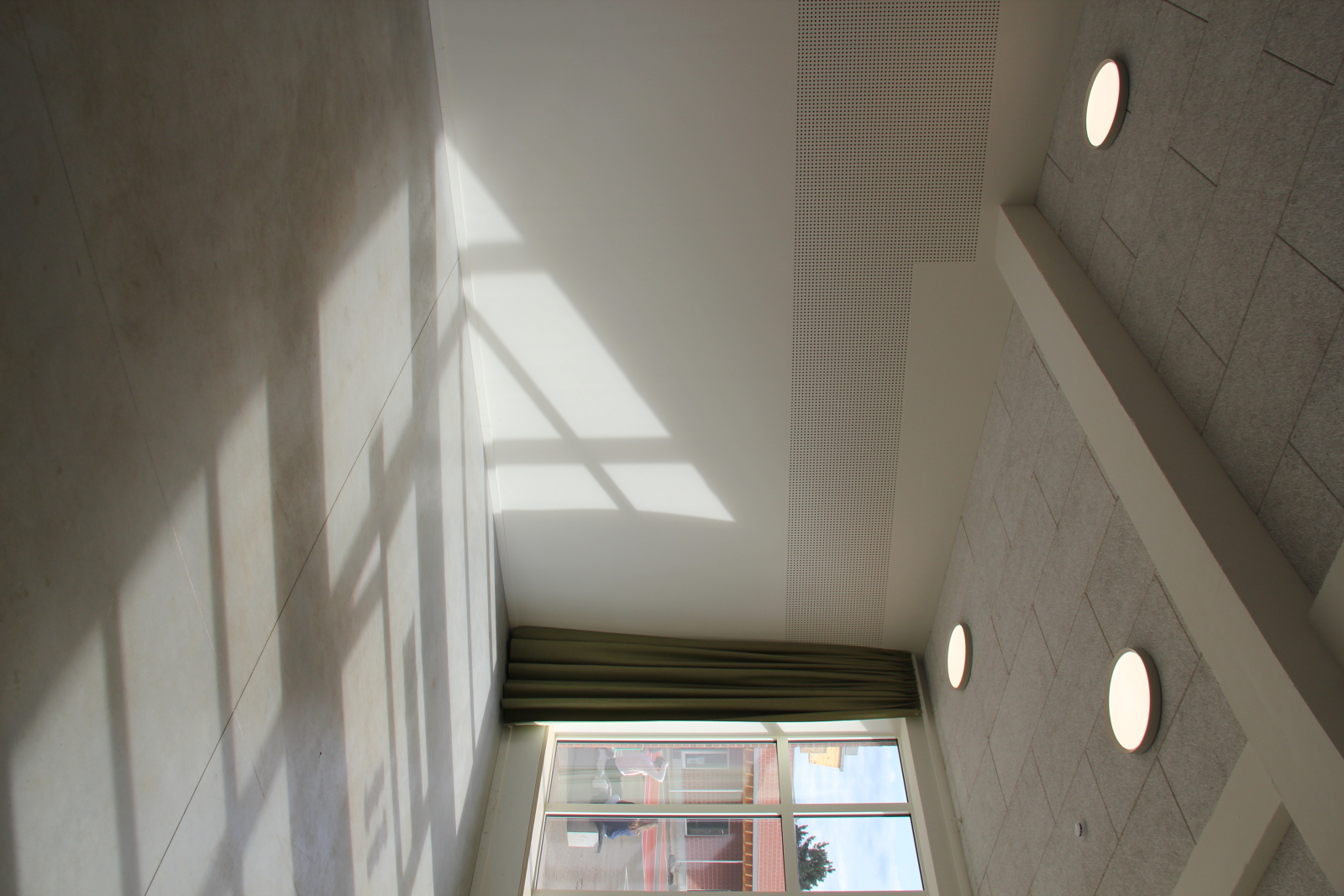
The extension is built on a modular, rational structure, making the building easily adaptable as needs evolve. What serves as a classroom today can be reconfigured tomorrow. Structural elements remain visible—construction and finish are one and the same. This reduces maintenance and enhances the legibility of the building for its users.
The design is part of a larger master plan for the campus. Existing buildings are retained and strategically linked to the new volume. Circulation is improved, playgrounds are depaved, and better connected to the landscape. As a result, the entire site is upgraded for long-term use.